 Burnt Cedar
 Green Mist Frames
 Mizzle No.266



“I find I can switch off from everything else whilst I’m in here making a pot. I get into what you might call a flow state. Time flies by and I’m totally absorbed.”
As Andrew showed us around his Little Green Room, we got the sense that the studio had become inseparable from the way he now approaches pottery.
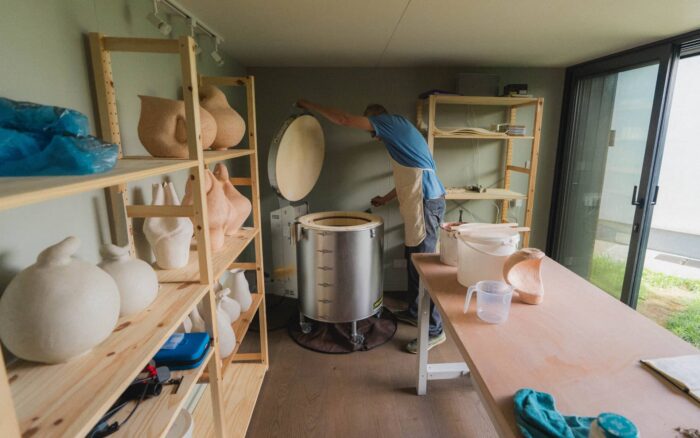
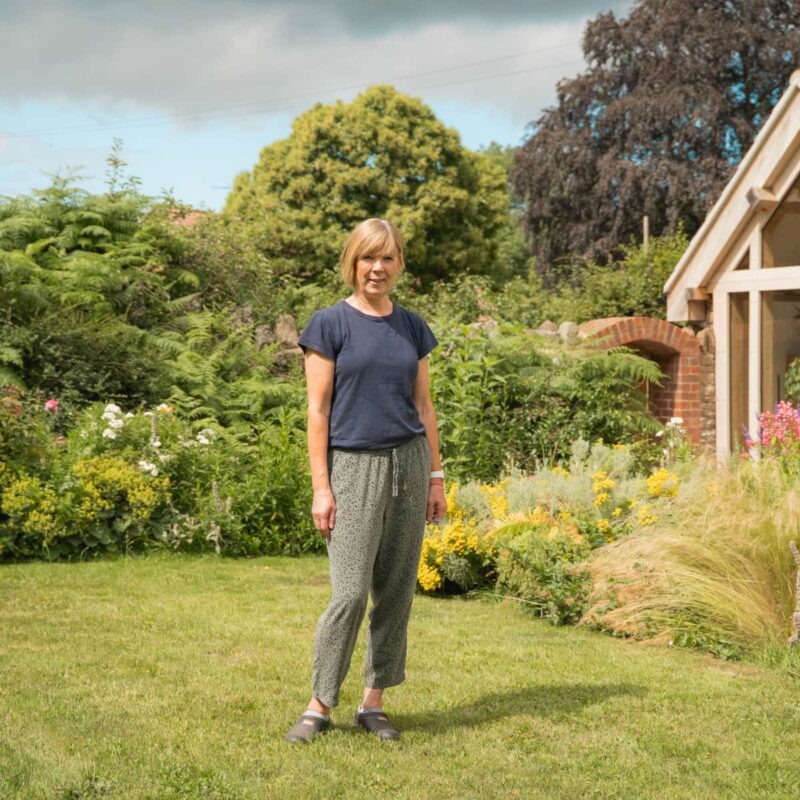
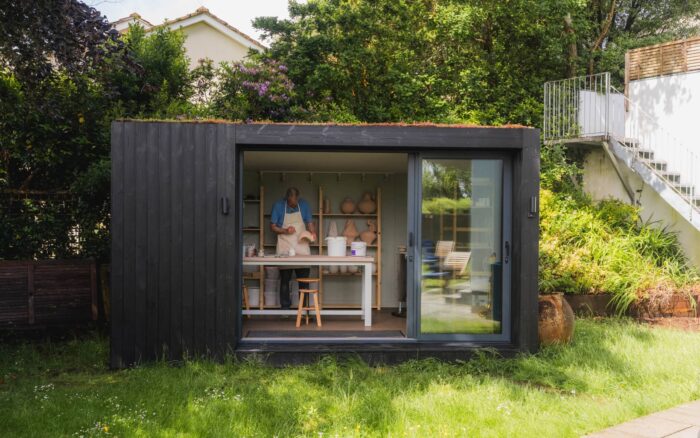
Works in progress sat alongside test pieces waiting to be fired, glazes lined the shelves, and ideas were pinned across the cork wall. Every surface seemed to reflect a craft that is constantly being explored and refined. Tucked into the garden of his Dartmouth home, the 4.3m x 3.5m studio has become a place for experimentation, learning and quiet concentration; somewhere Andrew can immerse himself completely in a craft he loves.
The freedom to experiment
Pottery had been part of Andrew’s life for years before the studio arrived. But until recently, much of that work took place in a shared pottery space, where access was limited and kiln firings happened to a fixed schedule.
The arrangement worked, but it often meant waiting for studio time, waiting for kiln firings, and having to adapt around set schedules and kiln temperatures.
Having a studio of his own has changed that completely.
“Having the studio has really taken my pottery to the next level,” he says. “I’m able to learn, experiment and develop techniques that I just didn’t have the space to do before.”
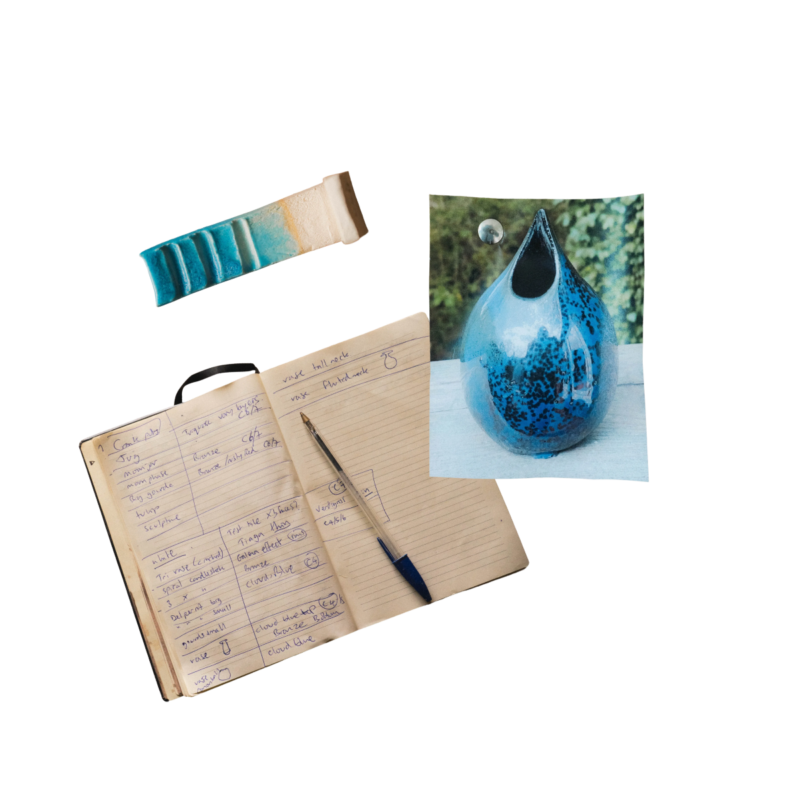
Andrew told us how he’s fascinated by the science behind the process itself; how different minerals, glazes and firing temperatures interact to produce entirely different colours and finishes. Much of his time is spent experimenting with carefully planned chemical reactions, testing how small adjustments can transform the final result. What makes a particular blue appear so vivid? Which firing conditions create a crackled surface? How can a glaze be adjusted to deepen a colour or alter a texture? Every firing is, in its own way, an experiment.
As he talked us through his process, it became clear just how much having his own kiln and studio has transformed the way he works. Instead of fitting experiments around somebody else’s firing schedule, he can test ideas whenever curiosity strikes, exploring possibilities that simply weren’t practical before.
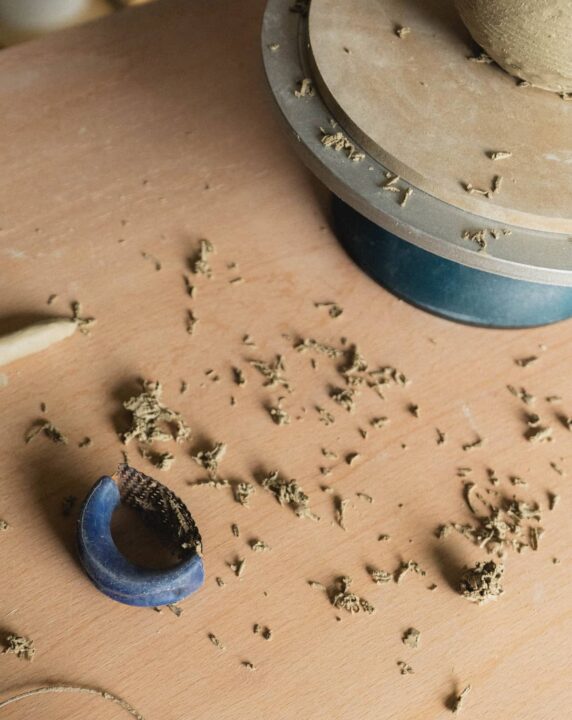
Finding flow
For all the experimentation that takes place inside the studio, there is also a remarkable sense of calm.
Large sliding doors fill the room with natural light and, more often than not, remain open while Andrew works. Fresh air moves through the space, accompanied by birdsong from the garden beyond.
“With the doors open, all I can hear is the birdsong,” Andrew says. “It’s lovely. It’s kind of a real natural space to be.”
The room feels connected to the garden around it, creating a sense of calm that seems perfectly suited to the slow, deliberate nature of pottery.
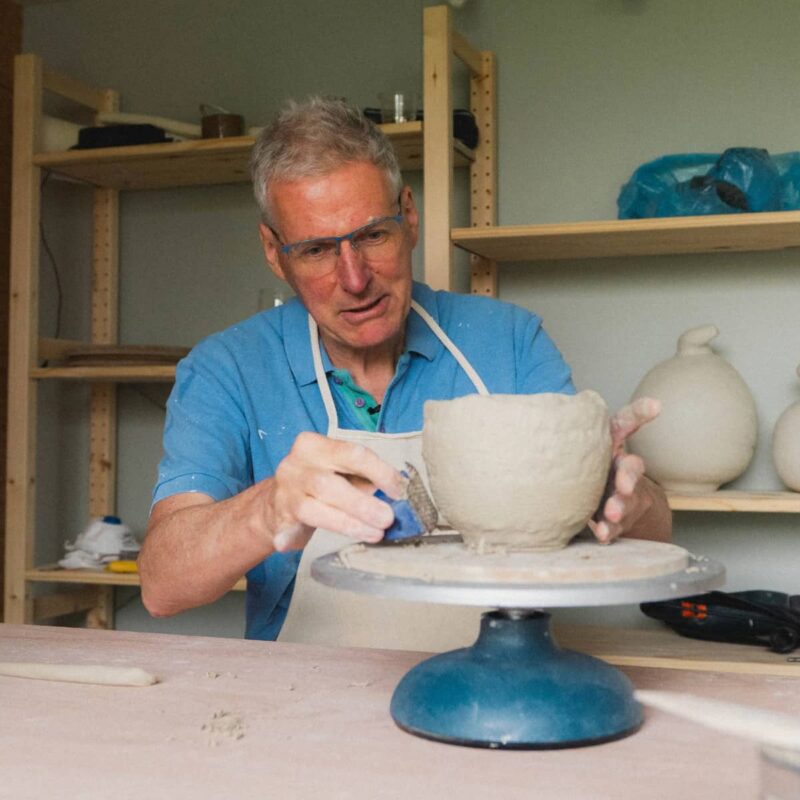
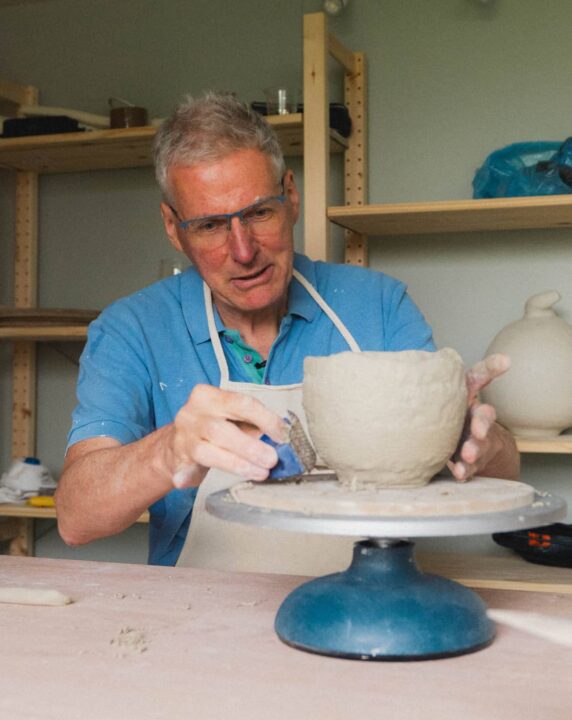
As we watched Andrew work, it became clear that the studio supports every stage of the process. One moment he was carefully adding coils to a pot, building up its form piece by piece. The next, he was glazing a recent creation, mixing and sloshing around an alarming amount of thick brown glaze with the confidence of somebody completely absorbed in what they’re doing.
It’s not difficult to see why having a dedicated space matters. Pottery can be chaotic, experimental work, and the studio gives Andrew the freedom to embrace that fully.
“Pottery is quite a messy hobby,” he says. “Just being able to keep that completely separate from the house is great.”
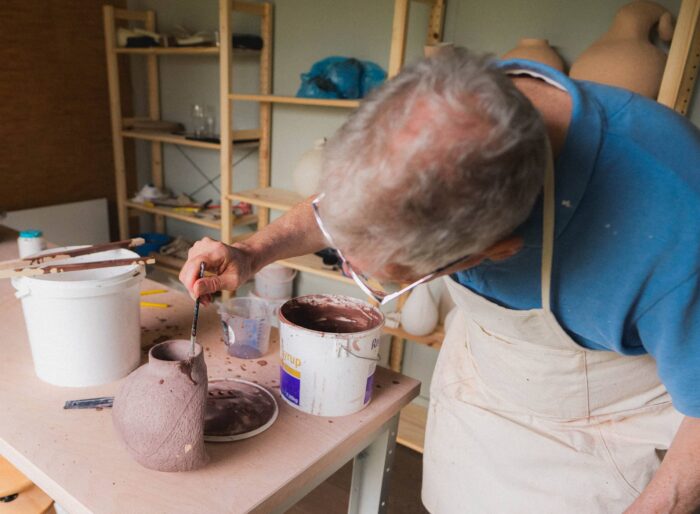
The studio may only have been installed earlier this year, but it’s already become an important part of Andrew’s creative life.
It’s given him the freedom to experiment more, work more often, and pursue ideas on his own terms. Looking ahead, he hopes to begin selling his work, and the studio provides the perfect space from which to grow his practice.
For now, though, he’s happy doing what he loves most: stepping into the studio, getting lost in the process, and seeing where the next firing leads.