 Burnt Cedar
 Anthracite Frames
 Cornforth White No.228

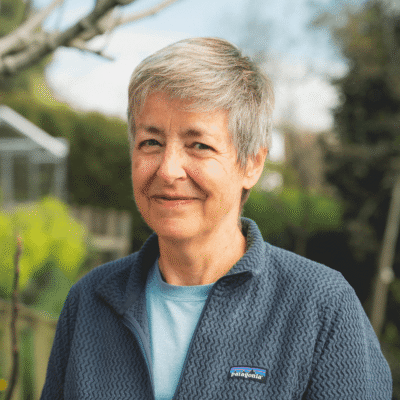
Some studios exist simply as places to work. Others become woven into the creative process itself.
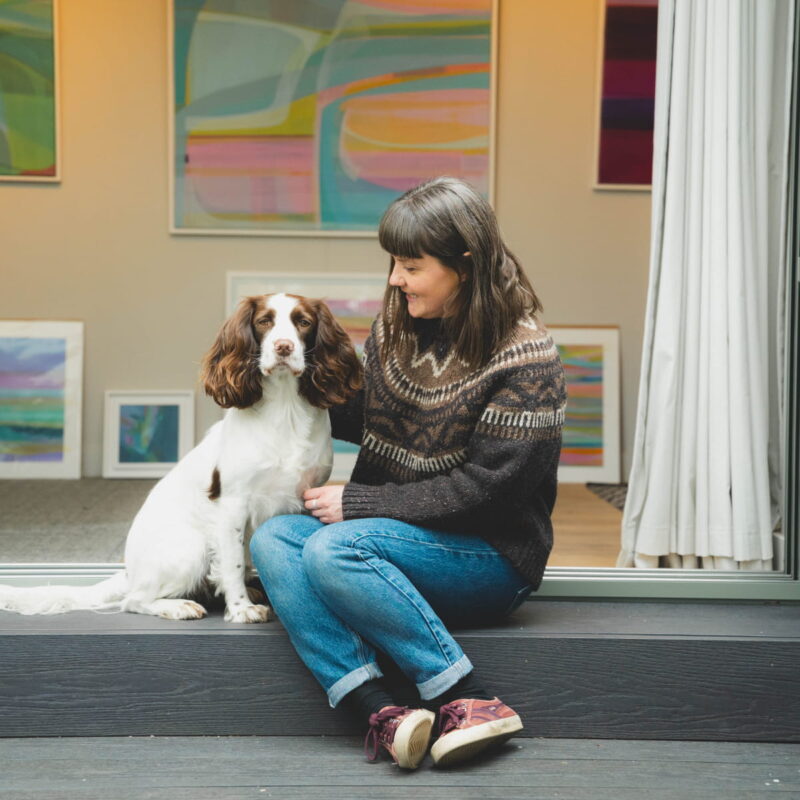
For contemporary artist Delyth Williams, her garden room is inseparable from the work she creates there. It is where ideas gathered on daily walks along the Pembrokeshire coast are given space to develop, where paintings evolve from loose sketches into finished pieces, and where creativity is shared through workshops, exhibitions, and open studio events. The room supports the work, but it also supports the lifestyle that makes that work possible.
When we visited Delyth, it quickly became clear how closely her creative practice is tied to the landscape around her. We spent the morning following her to the beach in her camper van, accompanied by her wonderfully friendly spaniel, Olive.
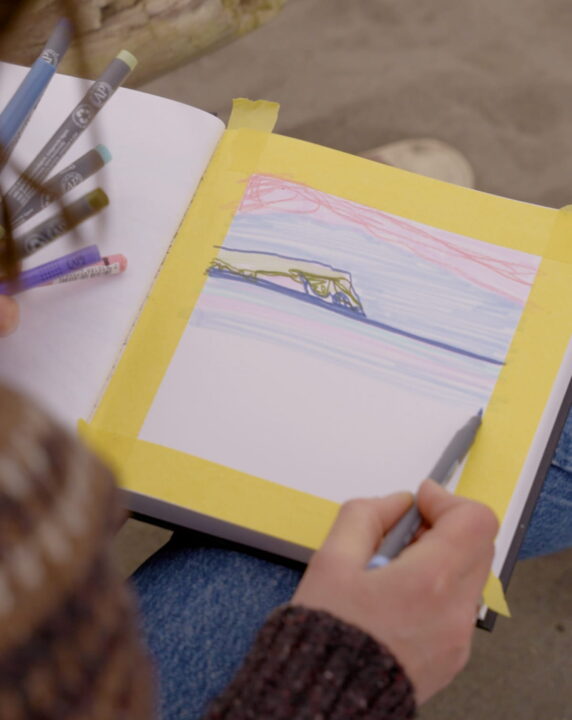
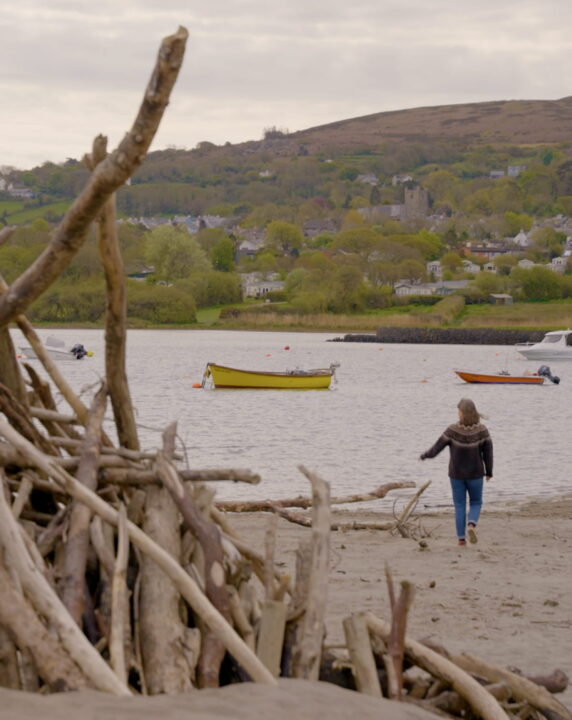
As we wandered along the shoreline, Delyth spoke about the details that catch her eye. These small observations become the starting point for much of her work.
“I’m inspired by little details,” she explains. “Like light dancing on the water, the shapes and texture in the sand created by the wind.
The sea is more than a source of inspiration; it’s a place of restoration. Living only a few minutes away means beach walks are part of Delyth’s daily rhythm, offering space to slow down, observe, and refill what she describes as her creative cup. Those experiences are carried back to the studio, where quick sketches and loose marks evolve into larger, more considered paintings.
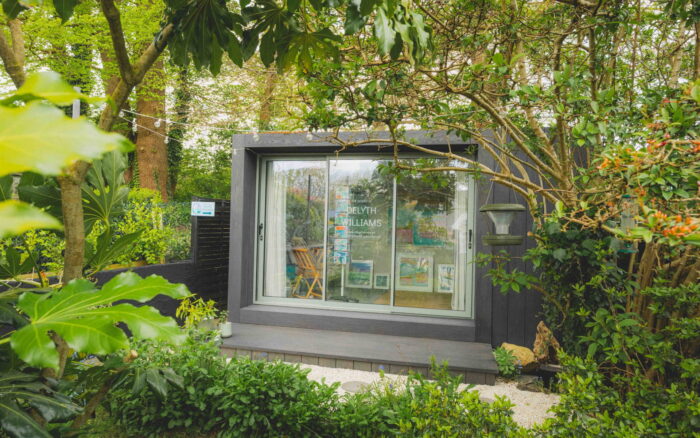
A studio shaped by the coastline
The garden room has become an extension of that creative process. Delyth explained how she used to work from a small box room in the house. While it gave her somewhere to paint, the space placed limits on how her practice could grow. There was little room for large-scale work, hosting workshops, or the inevitable creative chaos that comes with making art.
Today, the studio offers a very different experience. It gives her the freedom to spread out, leave work in progress where it is, and move seamlessly between creating, teaching, and exhibiting.
“The space really enables it to be multifunctional. I enjoy transforming it from a gallery to a more relaxed workshop feel.”
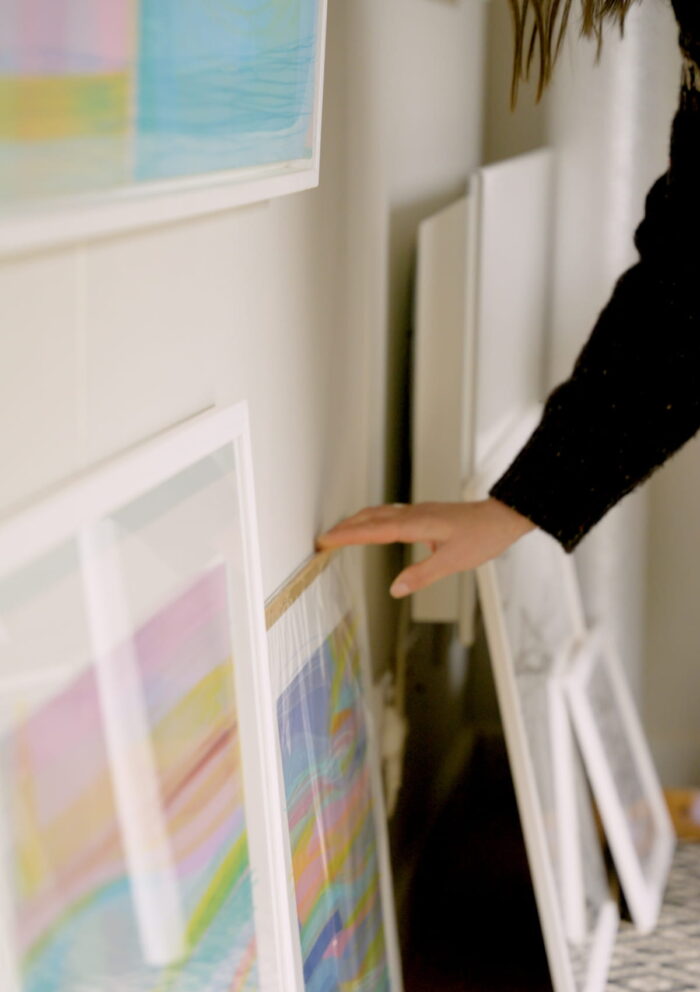
That flexibility was an important part of the design. It was so interesting to hear how Delyth’s studio supports every stage of her creative process, from quiet reflection and sketching to expressive mark-making and teaching others. It provides the practical freedom to leave projects out, work at scale, for Delyth to fully immerse herself in her practice. Most importantly, it has helped create the life she envisioned for herself.
“Having a designated workspace has enabled me to push my creative practice further and open up so many more opportunities”
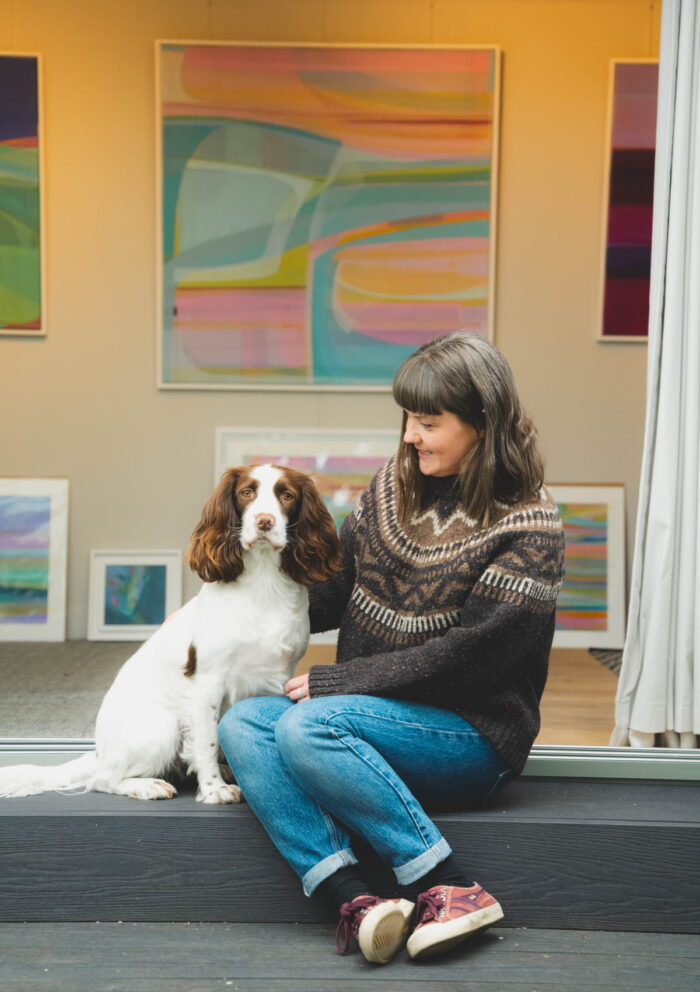
Spending time with Delyth, it was easy to see what she meant. The studio has given her more than somewhere to paint. It has created space for workshops, exhibitions, new connections, and a creative practice that feels deeply rooted in the landscape around her. The room supports the work, but it also supports the lifestyle that makes that work possible.
As the day drew to a close and we packed away our cameras, none of us were particularly eager to leave. Between the sea views, Olive’s enthusiasm for every stretch of beach, and Delyth’s infectious passion for her work, it was easy to understand why this corner of Pembrokeshire has become such a powerful source of inspiration. Her studio stands as a beautiful and functional extension of that landscape, a place where observations, emotions and memories are transformed into art.